Skip to content
Free Shipping On All Orders
FREE SHIPPING
Composite Construction Mats

Composite Ground Protection Mats

Protect turf, reduce rutting, and create safer access across soft ground. Shop by duty level — DuraDeck for light-duty turf protection, SignaRoad for medium-duty temporary roadways, and MegaDeck for heavy-duty jobsites and equipment traffic.

Click a duty level below to jump into the matching collection.

Free shipping on all orders Reusable HDPE — job after job Light, medium & heavy duty Fast quotes, national delivery

Not sure which duty level you need?

Answer 3 quick questions and the Ground Protection Mat Finder points you to the right mat.

Quick tip: If the ground is wet or soft, or vehicles will drive the same path repeatedly, choosing the next duty level up typically reduces rutting and shifting.

Ground Protection Mat Finder

Answer 3 questions — find your mat in under a minute.

Step 1 of 3

Recommended Mat
Shop This Mat →
A Helpful Guide

Composite Ground Protection Mats: How to Choose

If you need to protect turf, reduce rutting, or create safer access across soft ground, composite mats are a proven upgrade over plywood. This guide breaks down Eastgate Supply's three core options — light, medium, and heavy duty — so you can match the mat to your equipment, traffic pattern, and site conditions.

What are composite ground protection mats?

"Composite" mats are rigid, reusable panels made from engineered plastic blends — commonly HDPE (high-density polyethylene). In plain terms: they're tough, weather-ready panels that spread loads over a larger footprint, helping keep tires, tracks, and feet from sinking into soft ground.

Protect turf & finished surfaces

Reduce ruts and divots on lawns, landscaping, and other finished areas where cleanup is expensive.

Improve access & safety

A stable lane reduces slips and stuck-vehicle headaches — especially when a site gets wet mid-project.

Reusable, job after job

Unlike plywood that warps and breaks, composite mats are built for repeated deployments and storage between jobs.

Quick comparison: DuraDeck vs. SignaRoad vs. MegaDeck

Think of this as a duty ladder. If you're unsure, choose based on the heaviest equipment that will touch the mats and how often it will repeat the same path.

Light Duty
DuraDeck
Common usesTurf protection, landscaping access, pedestrian traffic, lighter equipment
NotableHandles loads up to 80 tons; built for hot/cold conditions
Typical size4' × 8'
Shop DuraDeck
Medium Duty
SignaRoad
Common usesTemporary roadways, work zones, deliveries, repeat vehicle/pedestrian traffic
NotableHDPE composite intended for hundreds of uses
Typical size6.8' × 10'
Shop SignaRoad
Heavy Duty
MegaDeck
Common usesHigh-traffic jobsites, soft/wet ground, heavy equipment routes
NotableUltra heavy-duty; rated up to 600 psi; non-absorbent HDPE, aggressive traction
Typical size7.5' × 14'
Shop MegaDeck

DuraDeck (Light Duty): turf protection & fast deployment

DuraDeck composite ground protection mat (4x8) stacked on a pallet
DuraDeck light-duty mat — 4' × 8'.

DuraDeck is the light-duty option — ideal when your main goal is protecting turf and creating quick access across softer ground without dragging in heavier, bulkier mats.

  • High capability for its class — handles heavy loads while staying easy to deploy.
  • Follows terrain — flexible enough to contour without cracking in normal use.
  • All-season readiness — designed for weather exposure and temperature swings.
Practical example: A landscaper needs a temporary access lane to bring a mini skid-steer across a finished lawn. DuraDeck spreads that weight out so you're less likely to leave ruts — especially when the soil is wet.
Shop DuraDeck

SignaRoad (Medium Duty): temporary roadways for repeat traffic

SignaRoad is the medium-duty choice — built for temporary roadways, pedestrian accessways, and steady jobsite traffic across mixed ground conditions.
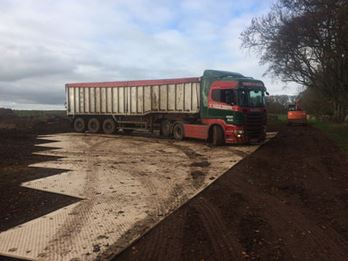
  • Temporary access roads — a reliable lane for deliveries, service trucks, and work crews.
  • Repeat paths — when vehicles drive the same route all day (or for multiple days).
  • Reusability — designed for frequent deployments across projects.
Practical example: A contractor needs a delivery lane over turf to stage pallets near a backyard build. If traffic is predictable and repeated, SignaRoad offers more stability than light-duty mats while staying manageable to deploy.
Shop SignaRoad
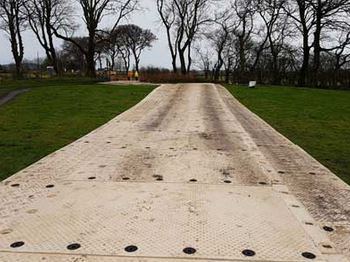
SignaRoad medium duty mats creating a temporary roadway across grass
SignaRoad medium-duty mat — 6.8' × 10'.

MegaDeck (Heavy Duty): maximum stability for demanding jobsites

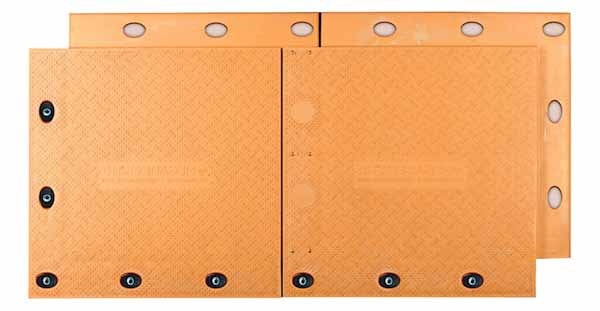
MegaDeck heavy duty composite mat panels with connection holes
MegaDeck heavy-duty mat — 7.5' × 14'.

MegaDeck is the heavy-duty choice — built for demanding environments where heavy equipment and high-traffic access require maximum stability.

  • Soft or wet ground — when rutting risk is high and you need a more stable base.
  • Heavy equipment routes — repeated passes from heavier machines.
  • High-traffic access lanes — where traction and rigidity matter most.
Practical example: Utility work in a wet shoulder where equipment needs a stable platform all day. MegaDeck is the go-to when trucks and machines must repeat the same line without chewing up the site.
Shop MegaDeck

Planning & installation: a simple step-by-step

You don't need to overcomplicate matting — but you do need to match the mat to the worst-case conditions (weather + traffic + weight). Here's a practical field checklist you can use before you place the first panel.

1

Identify your heaviest moment

List the heaviest equipment or delivery that will cross the mats — even if it's only once.

2

Map the repeat path

If vehicles follow the same lane repeatedly, consider stepping up one duty level to reduce shifting and rutting.

3

Check ground conditions

Wet or soft soil needs more support than dry, compact soil — plan accordingly.

4

Lay a straight spine first

Start with a straight run down the center of your lane, then expand outward to full width.

5

Secure connections as required

Use the appropriate connection hardware/pins so panels behave as one surface during turns and braking.

6

Inspect and adjust

After the first few passes, check for shifting or soft spots — then add mats or increase duty level where needed.

Frequently asked questions

Which mat is best for protecting lawns and finished landscaping?
Start with DuraDeck when your priority is turf protection and quick access for lighter work. If the ground is wet or soft, or traffic repeats, consider stepping up to SignaRoad.
When should I use SignaRoad instead of DuraDeck?
Choose SignaRoad when you need a dependable temporary roadway for vehicles, deliveries, and repeat jobsite traffic across mixed ground conditions.
When is MegaDeck the right call?
Use MegaDeck for demanding environments — heavy equipment routes, high-traffic access, and soft or wet ground where rutting is a major risk.
Do composite mats work in all seasons?
Yes. Composite mats are commonly used in changing weather because they don't absorb water like wood and can be redeployed project to project.

Still deciding on a duty level?

Answer 3 quick questions in the Ground Protection Mat Finder and get matched to the right mat in under a minute.

Bottom line

If you want a fast, lighter solution for turf protection, start with DuraDeck. If you need a more stable temporary roadway for repeat traffic, move up to SignaRoad. For the toughest sites and heavier equipment, MegaDeck delivers maximum stability. Not sure? The Ground Protection Mat Finder narrows it down in three questions.